5 Essential Steps to Master SHRM CP Situational Questions
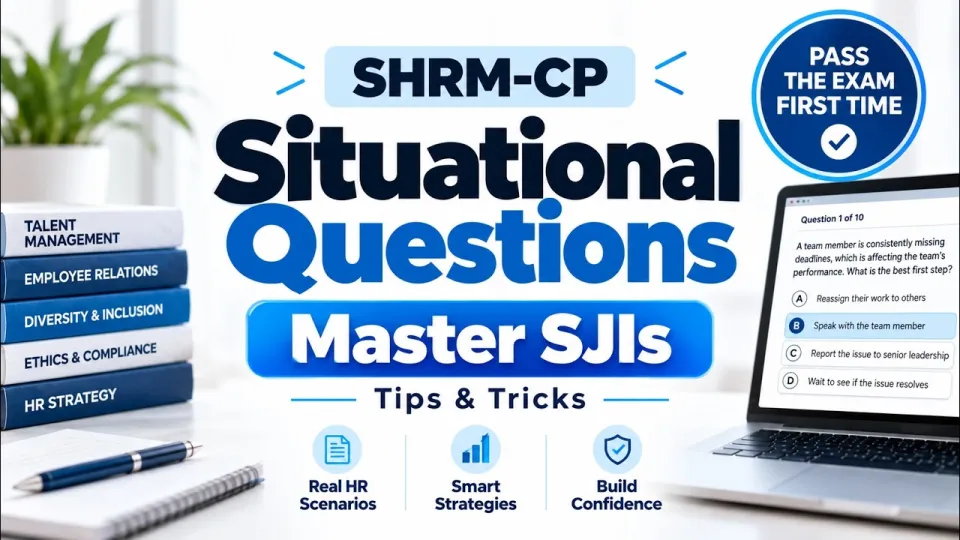
Видео: SHRM CP Situational Questions (SJIs) | TIPS TO PICK THE RIGHT ANSWER
SHRM CP Situational Questions (Situational Judgment Items or SJIs) challenge candidates to select the most appropriate response among several plausible options. To succeed, you must understand how to distinguish between seemingly correct answers and identify the one that best fits the scenario according to HR principles and legal guidelines. A practical starting point is using free practice resources like PrepSolution’s SHRM-CP free practice questions to familiarize yourself with question formats and answer strategies.
Understand What the Question Is Asking
Many SHRM CP situational questions ask whether you should pick the "first" step in a process or the "most effective" solution. Clarify if the question requires the immediate next action or the best overall resolution. This distinction helps filter out options that might be practical but not timely or vice versa. For example, an option suggesting "immediate escalation" may be premature if the question focuses on initial steps.
Use Five Decision Checks to Evaluate Answers
Apply a structured approach by assessing each answer against these five criteria:
- Facts: Does the option align with the scenario details and avoid assumptions?
- Policy and Law: Is the option compliant with company policies and legal requirements?
- Appropriate Escalation: Does it escalate issues only when necessary and to the correct authority?
- HR’s Role: Does the option respect HR’s responsibilities without overstepping managerial duties?
- People Involved: Does it consider the impact on employees, supervisors, and other stakeholders?
This checklist helps eliminate answers that may seem reasonable but fail on key organizational or legal points.
Recognize and Avoid Five Common Answer Traps
SHRM CP situational questions often include distractors designed to test your judgment. Watch out for these traps:
- Premature Action: Taking steps too early before gathering all facts.
- Passive Responses: Avoiding necessary intervention or ignoring the problem.
- Taking Over Managerial Duties: HR should support, not replace, managers.
- Unnecessary Escalation: Escalating issues that can be handled at a lower level wastes resources.
- Legally Defective Options: Choosing actions that expose the organization to legal risk.
By identifying these traps, you can narrow down the right answer more confidently.
Practice with Realistic Workplace Scenarios
Working through detailed scenarios, such as how HR should respond when a supervisor requests discipline after a shouting match, sharpens your ability to compare all options critically. For instance, you might need to decide if HR should gather more information first, coach the supervisor, or immediately initiate disciplinary procedures. Evaluating each choice against the scenario facts and company policies helps develop a reliable answer strategy.
Test Answers Against Scenario Wording and Context
Avoid relying solely on your personal workplace experience since organizational cultures vary. Instead, focus on the scenario’s specific wording and facts. Test each answer by asking if it directly addresses the problem posed and follows the question’s instructions. This practical elimination method ensures your choice is the best fit for that particular question.
Useful Links
Summary
Mastering SHRM CP situational questions requires applying a clear method to pick the right answer amid reasonable options. Focus on whether the question demands the first or best action, use five decision checks, and identify common answer traps. Practice with real scenarios and test answers against the scenario facts and wording rather than personal bias. The PrepSolution channel offers excellent resources to deepen your understanding and boost your exam readiness. Use their free practice questions to build confidence and sharpen your situational judgment skills.
Коротко
- SHRM CP Situational Questions test HR judgment and decision-making skills.
- Questions require choosing the best, not just the first, action step.
- Use five decision checks: facts, policy, escalation, HR role, and stakeholders.
- Avoid five common traps like premature action or unnecessary escalation.
- Practice with real scenarios improves ability to discern best answers.
Источник: SHRM CP Situational Questions (SJIs) | TIPS TO PICK THE RIGHT ANSWER · Версия в Markdown
Вопросы и ответы
What is the main challenge of SHRM CP situational questions?
The main challenge is choosing the best answer from several plausible options by applying HR principles, law, and appropriate escalation rather than just picking a seemingly reasonable response.
How can I tell if I should pick the first or the best action in a situational question?
Carefully read the question to identify whether it asks for the immediate next step or the most effective overall solution. This distinction guides you to select the option that fits the timing required.
What are common traps to avoid in SHRM CP situational judgment questions?
Common traps include premature action, passive responses, taking over managerial duties, unnecessary escalation, and legally risky options. Recognizing these helps eliminate incorrect answers.
How can practicing with scenarios improve my SHRM CP exam performance?
Practicing with realistic workplace scenarios helps you apply decision checks, compare all answer options critically, and improve your ability to select the best response aligned with policies and legal standards.